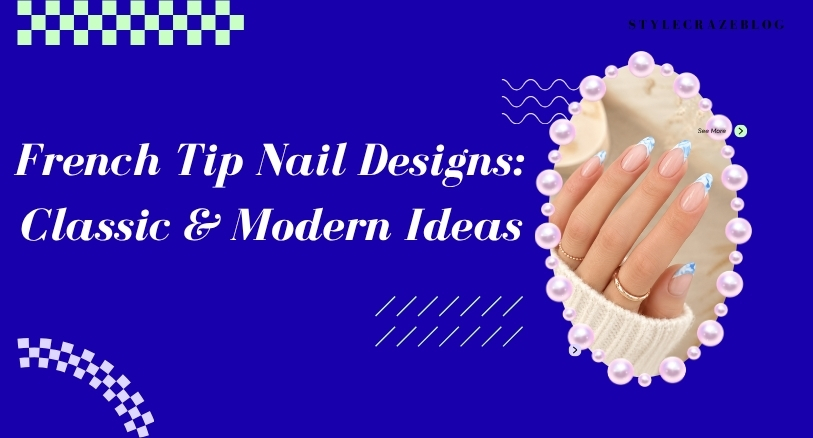
French tips have remained one of the most recognizable manicure styles because they can look polished without being limited to one color or shape. The traditional design pairs a natural-looking base with a white tip, but modern versions include colorful edges, metallic finishes, double lines, micro tips, and artistic variations.
Whether you prefer a subtle manicure for everyday wear or a more noticeable look for an event, French tips can be adapted to different nail lengths, shapes, colors, and aesthetics. The key is choosing the right combination of base, tip, shape, and finish rather than treating the classic white French manicure as the only option.
What Are French Tip Nails?
A French tip manicure is a nail design where the free edge of the nail is visually emphasized with a contrasting line or section of color. The traditional version usually has a sheer pink, nude, or milky base with a clean white tip.
Modern interpretations can change almost every part of that formula. The tip can be black, red, blue, chrome, glitter, pastel, or even multi-coloured, while the base can range from transparent to opaque.
This flexibility makes French tips suitable for both understated and creative manicures.
Classic White French Tips
The classic white French manicure remains a dependable choice for a clean and elegant appearance. A sheer nude, pink, or milky base keeps the overall look soft while the white edge creates definition.
The shape of the white tip can also change the appearance. A thin line gives a delicate result, while a wider tip creates a stronger contrast.
For a timeless manicure, consider:
- Milky pink base with white tips
- Sheer nude base with soft white edges
- Transparent base with bright white tips
- Rounded white tips
- Straight-edged French tips
- Slightly curved tips following the nail shape
The traditional version works particularly well when you want a manicure that can transition between casual and formal settings.
Modern French Tip Ideas
French tips no longer have to follow a single formula. Small changes to color, line thickness, placement, or finish can completely change the character of the manicure.
Micro French Tips
Micro French tips use an extremely thin line along the edge of the nail. They are especially suitable when you want the recognizable French effect without a bold white section.
This approach works beautifully with short nails because the narrow tip does not visually overwhelm the nail plate.
Double French Tips
Instead of one line, a double French design uses two parallel lines near the free edge. The lines can use the same color or contrasting shades.
For example, a nude base can be paired with a white line followed by a metallic gold line. The result has more detail while remaining structured.
Reverse French Tips
A reverse French manicure moves the contrasting detail away from the free edge and toward the base of the nail, following the curve around the cuticle.
This creates a different visual balance and can be particularly effective with contrasting colors.
Diagonal French Tips
Diagonal tips replace the traditional curved or straight edge with an angled line. Two colors can be used on opposite sides to create a graphic appearance.
This is a useful option when you want a French-inspired manicure that feels more contemporary.
Colorful French Tip Nail Designs
Changing the tip color is one of the easiest ways to create a different look while keeping the recognizable French structure.
Pink French Tips
Pink tips can range from soft blush to vivid hot pink. A nude or milky base keeps the design balanced, while a brighter base can create a coordinated monochromatic manicure.
For a softer appearance, pair a pale pink tip with a translucent pink base.
Red French Tips
Red creates a stronger contrast than traditional white and can make the manicure feel more dramatic.
Try a thin red tip for a refined look or a wider red edge when you want the color to become the main feature.
Black French Tips
Black tips provide a sharp alternative to white. They work especially well against nude, beige, transparent, or pale pink bases.
For an understated version, keep the black line thin. A wider black tip creates a more graphic manicure.
Blue French Tips
Blue can range from pastel baby blue to deep navy. Light blue creates a softer appearance, while navy gives the manicure more contrast.
Blue tips also work well with seasonal and vacation-inspired designs.
Green French Tips
Sage, olive, emerald, mint, and forest green can all be used for French tips. A neutral base allows the green edge to remain the visual focus.
Pastel French Tips
Pastel shades are useful when you want several colors without creating an overly intense manicure.
You can use one pastel shade across all nails or assign a different color to each tip while keeping the base consistent.
Rainbow French Tips
Rainbow French tips use multiple colors across the nails instead of repeating one shade.
A simple version can use pink, orange, yellow, green, blue, and purple tips. For a more coordinated result, choose colors from the same intensity range rather than mixing extremely bright and muted shades randomly.
Rainbow tips are especially suitable for summer, celebrations, vacations, and playful everyday looks.
French Tip Nail Designs for Different Nail Shapes
The nail shape can significantly change how the tip appears. The same design may look delicate on one shape and bold on another.
Almond Nails
Almond-shaped nails naturally create an elegant silhouette. Curved French tips complement the shape because the tip follows the tapered structure.
A medium-width white tip works well for a traditional appearance, while a micro French line creates a more delicate result.
Square Nails
Square nails provide a wider, more defined edge. Straight French tips emphasize this structure and create a crisp geometric appearance.
For a softer variation, slightly curve the corners of the tip rather than following a completely straight line.
Coffin Nails
Coffin nails provide a broad surface for experimenting with French designs. Wider tips, double lines, colored edges, and metallic details can all work effectively.
Because the nail surface is larger, you can also combine a French tip with small decorative details without making the design feel crowded.
Stiletto Nails
Stiletto nails have a dramatic pointed silhouette. A French tip can emphasize that shape by following the natural taper.
For a stronger effect, use a contrasting color such as black, red, or metallic silver.
Oval Nails
Oval nails work particularly well with curved French tips. A thin white or pastel line can maintain the soft appearance of the shape.
Short Nails
Short nails can absolutely wear French tips. The main consideration is keeping the tip proportionate to the available nail surface.
Micro French tips are particularly useful because they provide definition without taking up too much space.
For more understated manicure inspiration, see Simple Nail Designs, which focuses specifically on clean and minimal nail looks.
French Tips for Different Nail Lengths
Short French Tips
Short nails generally benefit from narrow tips and restrained detailing. Sheer bases, micro French lines, and one-color tips can make the manicure appear polished without visually shortening the nail.
Medium-Length French Tips
Medium nails provide enough space for experimenting with color, line thickness, double tips, and small decorative elements.
You can also combine two complementary shades without making the manicure feel crowded.
Long French Tips
Long nails provide more room for wider tips, layered lines, patterns, and contrasting colors.
Long coffin, almond, and stiletto shapes are particularly versatile for statement French designs.
Minimalist French Tip Ideas
A French manicure can be detailed without becoming complicated. If your preference is a clean aesthetic, focus on proportion and subtle contrast.
Some minimalist combinations include:
- Milky base with ultra-thin white tips
- Nude base with beige tips
- Clear base with tiny black tips
- Pale pink base with blush tips
- Neutral base with a single metallic line
- Sheer base with alternating micro tips
The quality of the line often matters more than the number of decorative elements.
French Tip Designs With Chrome
Chrome adds a reflective metallic appearance to the traditional French structure. Instead of using standard polish for the tip, a chrome effect can create a brighter and more dimensional finish.
Silver chrome works particularly well with nude or milky bases. Gold creates a warmer appearance, while rose gold gives the manicure a softer metallic tone.
Chrome can also be used as a very thin accent rather than a wide tip.
For a broader look at reflective finishes and metallic manicure ideas, see Chrome Nail Designs.
Glitter French Tips
Glitter tips are an easy way to make a traditional French manicure more suitable for celebrations.
Fine glitter creates a subtle shimmer, while larger glitter particles create a more noticeable effect.
Popular combinations include:
- Nude base with silver glitter tips
- Milky base with gold glitter
- Pink base with rose-gold glitter
- Clear base with holographic glitter
- Black base with silver glitter tips
For a sophisticated appearance, keep the glitter concentrated on the tip rather than covering the entire nail.
Metallic French Tips
Metallic tips can use silver, gold, copper, bronze, or rose gold.
They are especially effective against neutral bases because the metallic edge becomes the focal point. A thin metallic line is enough to transform an otherwise simple manicure.
Metallic French tips are suitable for parties, weddings, holidays, and evening occasions.
French Ombre and Soft Gradient Tips
A French ombre design blends the base and tip rather than creating a sharply defined boundary.
The classic version transitions from a natural or pink base into a soft white edge. This creates a diffused appearance that is less graphic than traditional French tips.
The style is particularly popular for wedding and formal manicures because the transition looks soft and polished.
French Tip Designs for Special Occasions
Wedding French Tips
For weddings, soft pink, nude, ivory, and milky bases are popular choices. White tips can remain traditional, while pearl or subtle metallic details can add dimension.
A French ombre manicure can also create a softer alternative to a clearly defined white tip.
Birthday French Tips
Birthdays provide more freedom to experiment with color and decoration. Pink, glitter, chrome, colorful tips, stars, or small accents can be incorporated without losing the French structure.
Party French Tips
For parties, consider metallic tips, glitter edges, black French tips, or contrasting color combinations.
The goal is to create enough contrast to make the manicure noticeable while keeping the design visually organized.
Vacation French Tips
Vacation-inspired French tips can use tropical colors, bright pastels, ocean-inspired blue, or alternating shades.
A neutral base helps bright tips stand out without requiring additional decoration.
Seasonal French Tip Ideas
Spring
Spring-inspired French tips can use pastel pink, lavender, mint, peach, and baby blue.
Small floral details can also be placed near the tip while keeping the French structure visible.
Summer
Summer designs can use bright yellow, coral, turquoise, orange, pink, and green. Rainbow tips are another natural choice for warm-weather manicures.
Fall
For fall, consider burgundy, chocolate brown, rust, burnt orange, olive, or deep red tips.
A nude or beige base keeps these deeper shades balanced.
Winter
Winter French tips can use white, silver, icy blue, deep navy, or burgundy. Metallic accents and subtle glitter can add a seasonal effect without turning the manicure into a full holiday design.
French Tip Combinations to Try
The base and tip combination can change the overall appearance considerably.
| Base | Tip | Overall Effect |
|---|---|---|
| Sheer pink | White | Classic and soft |
| Nude | Black | Modern and defined |
| Milky white | Silver chrome | Clean and reflective |
| Nude | Gold | Warm and elegant |
| Pale pink | Red | Romantic and bold |
| Clear | Pastel rainbow | Playful |
| Beige | Brown | Neutral and autumn-inspired |
| Milky base | Pearl | Soft and luminous |
| Nude | Burgundy | Sophisticated |
| Clear | Glitter | Festive |
How to Keep French Tips Looking Clean
A French manicure depends heavily on clean lines, so preparation and application technique matter.
Start with a properly shaped nail and an even base. Allow the base layer to settle before creating the tip so the colors do not blend together.
Keep the width of the tips relatively consistent across the set. They do not have to be mathematically identical, but large differences between nails can make the manicure look uneven.
A thin cleanup brush can help refine the edge after application. If you are doing the manicure at home, work slowly rather than trying to create the entire tip in one quick movement.
How to Make French Tips Last Longer
The longevity of a manicure depends on the products used, application quality, nail condition, and daily activities.
Avoid using your nails as tools for opening containers or scraping surfaces. Excessive exposure to water, harsh chemicals, and repeated impact can also contribute to lifting or chipping.
Moisturizing the surrounding skin and nails can help maintain their appearance. The American Academy of Dermatology recommends moisturizing nails after trimming and emphasizes proper nail-care practices.
If a manicure causes persistent irritation, pain, swelling, or noticeable nail changes, it is better to stop using the product and seek professional medical advice rather than covering the problem with another manicure.
Common French Tip Mistakes
Making Every Tip Too Wide
A wide tip can dominate a short nail. Adjust the thickness according to the nail’s length and shape.
Ignoring Nail Shape
A tip that works on a square nail may not look the same on a stiletto or almond nail. Follow the natural structure of the nail when deciding how the edge should curve.
Using Too Many Colors
Colorful French designs can become visually busy when several unrelated shades are combined. A consistent palette usually creates a more polished result.
Skipping Base Preparation
Uneven surfaces can make even a well-designed French tip appear messy. Shape and smooth the nails before applying the polish.
Overloading Decorative Details
French tips already provide a strong visual structure. Adding glitter, rhinestones, patterns, and multiple colors to every nail can make the design lose its clean appearance.
FAQ’s
Are French tip nails still popular?
Yes. The French manicure continues to be adapted through variations such as micro tips, colorful edges, chrome finishes, double lines, and ombre effects.
What color is best for French tips?
White remains the classic choice, but pink, black, red, blue, green, metallic, glitter, and pastel shades can all work depending on the desired appearance.
Do French tips look good on short nails?
Yes. Thin or micro French tips are particularly suitable for short nails because they keep the design proportional to the available nail surface.
What nail shape is best for French tips?
French tips can work with almond, square, coffin, oval, round, squoval, and stiletto shapes. The best result usually comes from adjusting the tip width and curve to complement the specific shape.
What is a micro French manicure?
A micro French manicure uses an extremely thin contrasting line along the free edge of the nail. It creates a subtle version of the traditional French manicure.
Can French tips be colorful?
Absolutely. Colorful French tips replace the traditional white edge with shades such as pink, red, blue, green, orange, purple, or pastel colors.
Are chrome French tips different from regular French tips?
The structure is similar, but chrome French tips use a reflective metallic finish instead of standard polish. Silver, gold, rose gold, and colored chrome can all be used.
Are French tips suitable for weddings?
Yes. Classic white tips, French ombre, milky bases, pearl finishes, and subtle metallic details are commonly suited to formal and wedding-inspired manicures.
How can I make French tips look cleaner?
Keep the base smooth, maintain a consistent tip width, work carefully around the edges, and use a small cleanup brush when necessary. Good nail preparation also helps create a more even result.